If you find out first aid only from posters on a staffroom wall, you will certainly establish dead spots. Real emergency situations hardly ever match neat layouts. They occur in cramped cooking areas, on damp pavement, in loud gyms, under the pressure of a hundred choices. Over years of first aid training and on-the-ground action, I have seen little errors snowball and straightforward, effective activities save lives. The difference is not heroism. It is practice, quality, and practical judgment.
This overview divides constant mistakes from tested methods that hold up in the mess of real life. It does not change a first aid course or a CPR course, and it ought to not. Abilities work out right into muscle mass memory when you practice them with a trainer who fixes your kind and obstacles your assumptions. Consider this as an area handbook you mentally carry, a way to spot catches prior to you action in them.
Start with the scene, not the patient
Rushing directly to the individual on the ground feels natural and is usually wrong. You owe the individual your visibility, but you additionally owe them continuity of care. If you are injured, sidetracked by threats, or separated from aid, your capability to assist collapses quickly.
Take a breath and check. Web traffic does not stop since someone swung. Electrical power does not dark due to the fact that you saw a torn line. A dog will defend its owner, also if that proprietor is in distress. In a manufacturing facility, a maker does not grow conscience. This initial, fast threat analysis comes to be a routine with method, and it establishes the tone for every little thing that follows.
I collaborated with a sporting activities club where a well-meaning teammate dashed right into the road to get to a collapsed jogger. He virtually caused a 2nd casualty. A various volunteer took three secs to wave down autos and setting cones we kept in a package. Those secs altered the scene from chaotic to managed. Your list is straightforward: what can injure me, what can harm other spectators, and what can make this worse.
Calling for aid, the right way
People still ignore just how specific you need to be when you call emergency solutions. Call-takers are trained to triage, yet they are not on scene with you. Obscure statements lose time. When you call, start with your specific area, consisting of spots or general practitioners collaborates from your phone, after that what happened, then the patient's condition.
There are 2 traditional errors right here. The very first is delegating the phone call with a shout right into a group. If you do not assign a person, you have actually not entrusted in all. The 2nd is hanging up ahead of time, commonly due to the fact that you really feel guilty speaking while others float. Remain on the line until they disregard you. They can trainer you via CPR or hemorrhaging control. If you are alone with a non-breathing grownup, telephone call first, after that begin upper body compressions on speakerphone.
In remote locations, you will find out difficult restrictions. Reaction time can stretch beyond 20 mins. If you hike, guide trips, or manage exterior occasions, obtain a first aid certificate that covers remote treatment and lug what you need to link that gap. A great first aid and CPR course will compel you to plan for those long minutes.
Airway and breathing, without the myths
Not every fainting spell needs a remarkable air passage maneuver, and not every seizure means you should place something in the mouth. As a matter of fact, placing anything into a taking individual's mouth threatens; it runs the risk of broken teeth and aspiration. Protect the head, roll onto the side when jerking quits, and time the event. If it lasts past five minutes, or if there are repetitive seizures without recovery, this is a medical emergency.

Gasping is an additional resource of complication. Agonal breaths appear like the body attempting to breathe, but they are not effective. If a person is less competent and gasping off-and-on, deal with that as not breathing. Start CPR. The sensation that you are doing way too much will certainly attract you to quit. Maintain going until educated help takes control of or the individual shows indicators of life.
For choking, the instinct to consume alcohol water is hard to tremble and generally makes it even worse. If they are coughing vigorously, allow them attempt to remove it. If the cough damages or they can not talk, perform back blows and abdominal drives. The series is unpleasant the very first time, which is a solid factor to take cpr training where you can practice on manikins.
CPR: compressions that matter
I have actually seen numerous sympathetic rescuers press quick and superficial in a panic. 2 policies bring the majority of the advantage: depth and recoil. Compressions for a grownup must be at the very least 5 centimeters, concerning a 3rd of chest deepness for a child, and a bit much less for a baby, making use of two fingers instead of hands. Allow the chest surge fully in between compressions. That recoil is the heart refilling.
Mouth-to-mouth is not required for lay rescuers on unidentified grownups. If you are educated and prepared, breaths can aid, but high-quality compressions take concern. Many people skip compressions to fiddle with an obstacle tool, or they stop for lengthy breaths. Those pauses expense perfusion. Go for a rate of 100 to 120 per minute, and maintain disturbances under 10 seconds.
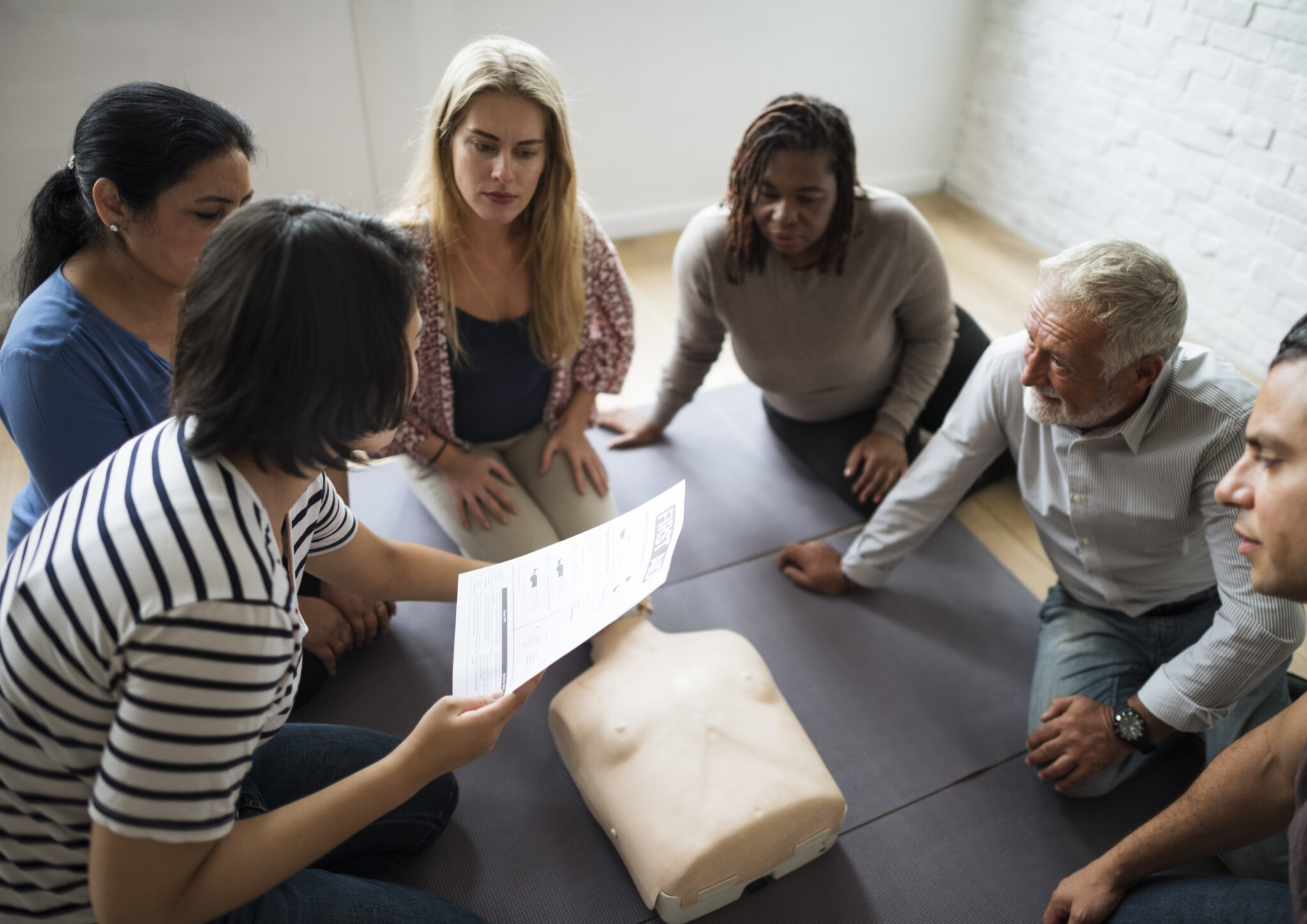
Practice is everything right here. A cpr refresher course each year keeps your hands honest. Several training centers make use of manikins with comments devices that instruct you what efficient compressions feel like. The weight, the rhythm, the persistence to keep going with mins that feel like hours, these do not originate from reading.
AEDs: straightforward, safe, and underused
An automated exterior defibrillator talks you through its very own usage. It will certainly not surprise a beating heart. The two significant errors are being reluctant to open the box and failing to expose the chest. Sticky pads should stick to skin. If the breast is hirsute, make use of the razor discovered in a lot of AED sets. If it is wet, completely dry rapidly to guarantee attachment. If there is a drug spot, remove it with a gloved hand and wipe the area.
Do not allow the existence of a pacemaker swelling under the skin quit you. Location the pad at least an inch far from any kind of dental implanted tool. And clear onlookers prior to a shock: hands off, loud voice, fast scan. It appears staged, however in a congested health club or workplace, somebody constantly attempts to "help" by keeping a hand on the shoulder. A quick, practiced news avoids an unintended shock to a helper.
Bleeding control: stress defeats gadgets
Fancy tourniquets and hemostatic gauze have their area, however the majority of exterior bleeding stops with consistent, direct stress. Not tapping, not looking to check, not moving the pad every couple of seconds. Press hard, maintain pressing, and boost just if it does not cause discomfort or take the chance of more damage. You can use cloth, a folded Tees, even gloved hands. Change saturated layers with even more on top instead of lifting the initial clothing, since you will interrupt the forming embolisms if you keep checking.
Tourniquets conserve lives when made use of properly on limb bleeding that will not quit with stress. The common errors are putting them over joints, not tightening sufficient, or loosening to "let the blood flow." Do not loosen up a tourniquet when applied. Note the moment. The majority of industrial gadgets are user-friendly if you have handled them as soon as. If your atmosphere consists of devices, equipment, or high-speed pastimes, obtain hands-on training with a licensed first aid pro. You do not want your very first time to be at an accident site.
Internal blood loss hides. Pale skin, great sweat, a dropping level of responsiveness, and a fast, weak pulse signal trouble after a tough strike, especially to the abdomen or breast. This is not a location for natural remedy. Maintain the person still, cozy, and obtain assist moving fast.
Fractures and neck injuries: do less, better
Straightening a mangled limb looks heroic in films and goes severely in parking lots. Splint in the position discovered unless there is no pulse beyond the injury or the skin is at danger. Debilitate the joint above and below with whatever you have: board, publications, rolled-up coat. Pad well to reduce pressure points. Check flow, experience, and activity before and after.
Neck and back injuries are frequently over-suspected and sometimes unfortunately ignored. The policy is mild control, not a fumbling suit. If you think a spine injury, ask the individual not to move, sustain the head in the placement you located it, and protect against turning while you analyze. Do not use a makeshift collar unless you have been trained and have appropriate tools. In the real world, I have seen a lot more damage from amateur collars than from mindful manual stabilization.
Know when to loosen up. A low-speed mishap with a totally sharp, comfortable individual who walked away might not require immobilization. On the other hand, an autumn from a ladder with confusion or numbness deserves rigorous activity control. Good first aid training helps you arrange the gray areas as opposed to reaching for extremes every time.
Heat, chilly, and the little errors that compound
Environmental injuries are built from little, easy-to-miss decisions. Warm exhaustion looks like clumsiness and irritability before it looks like collapse. Early indications are headache, aches, and queasiness. Relocate the individual to color, loosen apparel, and cool them with water and air flow. Offer small sips if they are alert. Avoid cold pack over crucial organs; concentrate on armpits, groin, and neck for efficient cooling. Warmth stroke is different: altered psychological condition and a warm, commonly dry skin. That is an emergency situation, and cooling ends up being hostile while you ask for help.
Hypothermia does not only take place in snow. Wet wind at 10 Celsius can attract warm faster than you anticipate. The error I see most is misuse. Cold hearts are cranky. Raise and move delicately, keep the person horizontal if possible, and protect from the ground. Warm the core first. Massaging limbs or forcing warm drinks can worsen the condition. If shivering quits and they become confused, you are behind the curve.
Burns: when water is your finest tool
An excellent rule: cool down the melt, not the person. Run cool, not cold, water over the location for at least 20 mins if you can. That home window prolongs genuine advantage also when started late within 2 to 3 hours. Do not use butter, toothpaste, egg whites, or any one of the individual mixtures that still circulate. They catch heat and raising infection risk. Remove rings or tight items early before swelling catches them, but leave stuck clothing in position and cool with it.
Blister administration drives debate. For first aid, leave sores undamaged and cover loosely with a clean and sterile, non-adhesive dressing. Look for treatment for burns larger than a palm, burns on the face, hands, feet, genital areas, or over joints, and any kind of electrical or chemical burns. Chemical burns require prompt large watering. Brush away completely dry chemicals before purging to stay clear of triggering them with water on the skin's surface.
Chest discomfort and the silent extremes
Chest pain does not constantly look like a hand held to the sternum. Women, older grownups, and individuals with diabetic issues may offer with lack of breath, queasiness, jaw or back discomfort, or uncommon fatigue. If you think a heart occasion, keep the person calmness and still. If they have recommended nitroglycerin, help them take it as routed while they sit. Chewable aspirin may be appropriate if the individual is not allergic and has no bleeding threat background, but follow regional guidelines and training.
A regular misstep is walking somebody around "to obtain air" or driving them on your own because calling a rescue seems like making a scene. Paramedics do more than transportation. They start therapy and communicate with healthcare facilities en course. Shaving 5 mins off the path to conclusive care often changes outcomes.
Diabetics, fainting, and the sugar trap
When somebody lightheaded collapses at a celebration, a loads spectators bring juice. In some cases that helps. Occasionally it aids you really feel valuable. Without a clear history, do not put fluid right into the mouth of a person with altered awareness. If the individual is awake adequate to swallow and you believe low blood glucose, fast sugar sources like glucose gel, a soda, or even honey can lift them over a bulge. If they are drowsy, slurring, or you can not wake them, do not require food or beverage. Roll them local CPR course to their side to safeguard the respiratory tract and call for help.
People typically perplex fainting with seizures. A simple pale is quick, with fast recovery once the individual is supine and blood flow go back to the mind. A characteristic of a seizure is a post-ictal phase: complication, migraine, and exhaustion that does not solve in secs. Time the occasion, secure the head, and display breathing.
Allergies and anaphylaxis: rate over second-guessing
Anaphylaxis is not simply hives and swelling. Try to find breathing difficulty, relentless coughing, voice adjustments, vomiting, lightheadedness, and a sense of doom. If the individual has an epinephrine auto-injector, aid them use it on the external upper leg. Do not be afraid "overreacting." The larger mistake is waiting as signs rise. Epinephrine is the first-line treatment, not an antihistamine. If you carry out, call emergency situation solutions and prepare to duplicate in 5 to 15 mins if signs persist and you have a second dose.
Parents in some cases stow away auto-injectors unreachable to safeguard youngsters. In technique, unreachable ways pointless. Keep them in foreseeable, accessible places and ensure caregivers and trainers know where they are. A brief first aid and cpr course that includes anaphylaxis drills pays rewards here.
Head injuries: the subtlety behind "just a bump"
Not every strike to the head requires a check, however a few red flags must trigger immediate treatment: repeated vomiting, getting worse headache, seizure, uncommon sleepiness, confusion, a period of passed out longer than a couple of secs, or any kind of focal weak point or numbness. For sports, if you think blast, get rid of the gamer from activity. Signs and symptoms can show up late, over 24 to 2 days. Err on the side of rest and medical analysis. The blowing to play through it has sidelined more teens for even more seasons than a cautious benching ever did.
The mistake to stay clear of is focusing on the cut. Scalp wounds hemorrhage dramatically, which draws interest, while the mind underneath might be concussed. Control blood loss with pressure, yet maintain your judgment on the person's behavior, speech, and balance.
Infection control that stands up when you are tired
Gloves, eye security, and masks seem like overkill up until you wish you had them. Many first aid packages consist of a minimal variety of non reusable handwear covers that tear conveniently. Take into consideration including a pair of sturdy nitrile gloves in your dimension. Clean hands before and after care when possible, and make use of sanitizer as a bridge, not an alternative. For needlestick risks or blood direct exposure, look for medical recommendations very early as opposed to "waiting to see." I claim this with the memory of a volunteer who cleaned up after a nosebleed without gloves due to the fact that it felt discourteous to put them on. She spent months in follow-up screening she might have avoided.
Use barriers for rescue breaths if you offer them. If you do not have a barrier tool, hands-only CPR continues to be a superb alternative for adult cardiac arrest. For infants and children, where hypoxia is regularly the reason, breaths supply even more advantage, which underscores the worth of appropriate first aid and cpr courses that prepare you for pediatric scenarios.
Documentation and handover: the peaceful professional move
Write down CPR course near Morphett Vale what you see and do. Time of occurrence, time you began CPR, when the AED examined, when you applied a tourniquet or provided an epinephrine dosage. This record aids paramedics and shields you legally. During handover, speak in ordinary language, not jargon you half-remember. "He was unresponsive and gasping. I started compressions at about 5:12. AED advised a shock once. We stunned. He began breathing normally around 5:19." That is clear, useful, and respectful.
If the occasion happens at the office or in a club, complete the case record as quickly as sensible. Truths fade rapidly. A clean record also aids your company improve its first aid set, AED placement, and training plan.
The role of training: why abilities drift
Confidence is not skill. Many people lug a first aid certificate from years ago and think they remember the basics. Guidelines evolve, and your hands forget. Compression rates, depth targets, sinking protocols, and even bleeding control suggestions have actually adjusted over the last years. After instructing hundreds of students, I can inform you that refresher course pupils commonly overestimate their recall of series and take too lightly how fatiguing correct CPR is.
This is not a scold. It is an invite. Pick a first aid training carrier that runs scenario-based practice with responses. Search for combined styles if your timetable is limited: concept online, abilities in person. If you supervise a group, sustain the society by setting up a cpr course or a combined first aid and cpr course at the very least every two years, preferably with much shorter refresher courses yearly. Individuals will certainly turn up if you treat it as vital, not optional.
Building a kit you will in fact use
Kits fall short when they are made for magazine pictures instead of the realities of your life. If you instructor young people sporting activities, supply a lot more immediate cold packs, natural plaster, tape, and blister treatment. In a workshop, include a commercial tourniquet, added gauze, and shed gel or straightforward cling film for covering. For hiking, weight issues. Concentrate on pressure dressings, a triangular plaster, sore therapy, and a SAM splint you can form for numerous usages. If you take care of a workplace, invest in an AED and place it in a visible, main location with clear signage.
Rotate supply. Adhesives dry out, handwear covers break down, and batteries die. Put a calendar pointer to check packages two times a year. After any type of serious use, restock quickly. A vacant package is a prop, not a plan.
Here is a short, high-yield kit check that fits most workplaces and clubs:

- Gloves that fit, lots of gauze, tape that really sticks A commercial tourniquet and a stress bandage A pocket mask or face shield for rescue breaths Instant cold packs and elastic cohesive bandage AED with spare pads and current battery
Coaching others on scene
One capable rescuer is good. One qualified rescuer who can route three eager bystanders is much better. Your tone issues. Pick jobs and designate names. "Maya, call Tasmania first aid course emergency services and remain on with them. Liam, bring me the AED from the entrance hall. Chen, wait the elevator to assist paramedics." It decreases duplicate initiative and calms the power around you. If someone tries to argue or hover, provide a work that assists and keeps them out of the way, like getting rid of room or meeting responders at the door.
You will certainly encounter the well-meaning doubter, the individual that believes CPR breaks ribs so you should push gently, or that you need to never use a tourniquet. A stable, short description acquires you space to work: "Ribs might fracture, yet compressions are what circulate blood. We need deepness." Save disputes for later.
The two-minute reset: a straightforward cadence that works
Emergencies press interest. You will certainly forget to reassess. Develop a peaceful habit of a time-based reset. Every number of mins, ask yourself: is the scene still safe, is the respiratory tract open, is taking a breath efficient, is bleeding regulated, has the person's level of feedback changed, and what is the following best action till assistance arrives. This micro-check prevents one-track mind on a clothing while the individual gets on shock, or on shock while a pad peels off a damp chest prior to an AED analysis.
If you have more than one trained person on scene, switch compressors every 2 minutes during CPR to prevent exhaustion. Make use of the AED's prompts as a metronome for these swaps. It really feels official at first and comes to be fluid with practice.
When to step back
Not every scenario wants a helper between. Combative intoxication, crowd violence, harmful materials, or a family members in raw sorrow can create threats you can not mitigate without even more resources. Know your limits and respect them. Your responsibility of care does not consist of ending up being a 2nd person. Call early, observe, and provide the most effective details you can to responders. If you can make the scene much safer for professionals by switching off equipment, unlocking entrances, or removing a path, do that.
Choosing training that fits your reality
All first aid courses are not the exact same. If you manage youngsters, ensure your first aid and cpr courses consist of pediatric content and choking alleviation for babies and kids. If you handle a gym, focus on AED familiarity and exertional warmth illness. Industrial sites ought to add bleeding control and crush injury situations. Ask companies concerning trainer experience, class dimension, and hands-on ratio. Search for cpr courses with existing standards and manikin feedback.
A trusted first aid pro will certainly not overpromise. They will certainly inform you what a lay rescuer need to not try, equally as clearly as what you should. They will certainly weave in judgment, not just steps. They will certainly allow you practice up until you are exhausted and then ask you to do another round, since that is how genuine tiredness feels throughout long term CPR.
The spirit behind the skills
The ideal first aiders I know are not adrenaline chasers. They are methodical, calm, and usually quiet. They practice in their heads, they keep their kits uninteresting and practical, and they refresh their training before it stagnates. They likewise make peace with flaw. You will neglect an action someday. You will apply a clothing that slides or begin compressions somewhat expensive and change. What matters is not perfect choreography. It is deliberate action rooted in basics that do not alter with the lighting or the noise.
Take a course. Reserve a refresher. Place an AED where individuals collect. Educate your youngsters to call for help. Replace the dried-out tape in your set. The rest follows from those basic, adult decisions. When the day comes, and it will certainly can be found in some form, you will certainly prepare sufficient, which is precisely what the person before you needs.